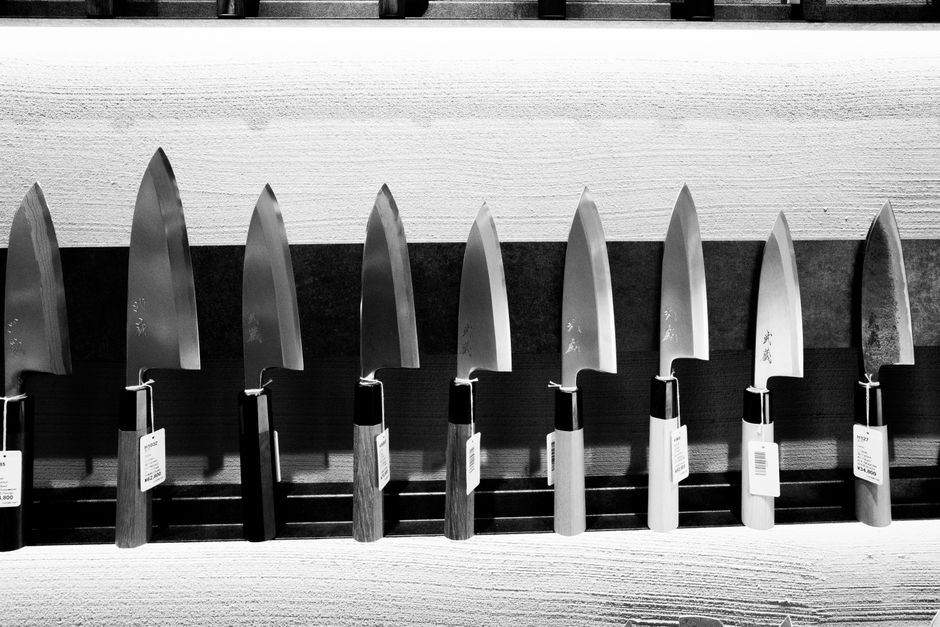
sharpeners for Japanese and single-bevel knives buying guide

Steeper, asymmetric edges need a different sharpening approach than a standard Western knife

Your Western sharpener wasn't built for a single-bevel edge.

Japanese single-bevel knives are ground on one face only, at a steeper, more acute angle than double-bevel Western blades -- and the flat back needs its own maintenance. We compare whetstones and finishing stones suited to that geometry.

Compare single-bevel whetstones
⚡ Limited-time perk

Free two-day delivery on your pick

Sharp knives, fresh ingredients -- try Amazon Prime free for 30 days and get your sharpener in two days.

Sponsored link -- we may earn a fee if you sign up. No extra cost to you.

Quick answer: Our top pick for sharpeners for Japanese and single-bevel knives is the Naniwa Chosera 1000 Grit Ceramic Whetstone (with base) (Best Overall). If you're looking for best premium progression set, the Shapton Ha No Kuromaku E-Set (#1000 / #5000 / #8000 Grit) is a strong alternative.

A single-bevel edge is a different tool entirely

Reviewed by the Sharpener Central team · last updated 2026-08-24

Most Western kitchen knives are sharpened symmetrically on both sides of the blade, usually between 15 and 20 degrees per side. Traditional Japanese knives like the yanagiba, deba, and usuba are ground almost entirely on one face, often down to 8-12 degrees on that single bevel, with the back kept nearly flat. Run one of these through a standard V-slot or double-sided guided sharpener and you'll grind away the flat back and round off an edge geometry that took a skilled sharpener real effort to put there.

Sharpening single-bevel knives correctly means working freehand on a whetstone (or a stone-based finishing system), matching the existing bevel angle instead of imposing a symmetric one, and periodically flattening the back -- a step called uraoshi -- to keep it from going concave or convex over years of use. That's a different skill and a different set of tools than sharpening a Western chef's knife.

Below, we compare whetstones and finishing stones well suited to that process: a fast-cutting base stone for repairing a dull edge, a premium multi-grit progression for finishing, a dedicated finishing stone for the final polish and back maintenance, and an affordable starter kit with an angle guide for learning the technique.

Single-bevel vs. double-bevel geometry

A single-bevel knife is ground on one face only, with the other side kept nearly flat (the ura); a double-bevel Western knife is ground symmetrically on both sides. Sharpening a single-bevel knife on a tool built for symmetric edges will slowly destroy its geometry.

Matching a steeper, more acute angle

Traditional single-bevel Japanese knives are often sharpened at 8-12 degrees on the beveled side, noticeably more acute than the 15-20 degrees typical of Western blades. A whetstone lets you match that angle freehand; most fixed-angle guided systems don't go that low.

Grit progression for a finer finish

Single-bevel knives are typically taken through more grit stages than a quick Western knife touch-up -- a coarse stone (around 1000) to repair the edge, then mid and fine stones (5000-8000+) to polish it, since the exposed single bevel shows scratches and unevenness more than a double-bevel edge does.

Flattening the back (uraoshi)

The flat back of a single-bevel knife needs occasional light maintenance on a fine stone to keep it truly flat -- if it goes concave or convex, the knife stops cutting cleanly no matter how sharp the beveled edge is. This step has no equivalent on a double-bevel Western knife.

Product Best For Price Rating
Naniwa Chosera 1000 Grit Ceramic Whetstone (with base) Best Overall $70 - $90 4.6/5
Shapton Ha No Kuromaku E-Set (#1000 / #5000 / #8000 Grit) Best Premium Progression Set $160 - $210 4.7/5
Suehiro Debado LD-601 Finishing Whetstone #4000 Best Finishing Stone $100 - $115 4.7/5
King Deluxe Whetstone Starter Set (1000/6000, with Angle Holder & Base) Best Value Starter Set $55 - $70 4.6/5
Best Overall

Naniwa Chosera 1000 Grit Ceramic Whetstone (with base)

4.6

A professional-grade Japanese ceramic waterstone that cuts fast for its grit and stays flat longer than most, making it a solid base stone for establishing a single-bevel edge before moving to finer grits.

  • Fast-cutting ceramic stone that resets a dull or nicked single-bevel edge quickly
  • Holds its flat surface longer than typical waterstones
  • Comes with a stable base for one-handed control
  • Needs a finer finishing stone afterward for a polished edge
Best Premium Progression Set

Shapton Ha No Kuromaku E-Set (#1000 / #5000 / #8000 Grit)

4.7

A three-stone splash-and-go ceramic progression that takes a single-bevel edge from repair to mirror-polish without the long soaking times of traditional waterstones -- useful for the finer grit steps single-bevel knives benefit from.

  • Splash-and-go stones need only a quick wet, not a long soak
  • Three-grit progression matches the fine finishing single-bevel edges want
  • Consistent, hard ceramic surface wears evenly over time
  • Highest total cost of the picks here across three separate stones
Best Finishing Stone

Suehiro Debado LD-601 Finishing Whetstone #4000

4.7

A dense, non-absorbent ceramic finishing stone built for the final polishing pass on single-bevel blades, refining the edge and the flat back (ura) without the deep soaking traditional stones require.

  • Non-absorbent ceramic needs only a quick splash, not a soak
  • Dense surface holds flat well, important for maintaining the ura
  • Produces a refined, low-drag finish on single-bevel edges
  • A finishing-only stone -- needs a coarser stone first for dull or damaged edges
Best Value Starter Set

King Deluxe Whetstone Starter Set (1000/6000, with Angle Holder & Base)

4.6

A complete Japanese-made starter kit with a dual-grit combination stone, base, and clip-on angle holder, giving beginners an affordable way to learn the steeper angle and one-sided technique single-bevel knives require.

  • Angle holder helps beginners learn the steeper single-bevel angle
  • Dual 1000/6000 grit covers repair and polishing in one stone
  • Lowest price of the picks here, with everything needed to start
  • Softer stone wears and dishes faster than premium ceramic options

Frequently Asked Questions

Why can't I sharpen a Japanese single-bevel knife the same way as a Western knife?

Most Western knives are sharpened symmetrically on both sides, usually between 15-20 degrees per side. Traditional Japanese knives like the yanagiba, deba, and usuba are ground almost entirely on one face, often down to 8-12 degrees on that single bevel -- running one through a standard V-slot or double-sided guided sharpener will slowly destroy that geometry.

What is uraoshi and why does it matter for single-bevel knives?

Uraoshi is the periodic flattening of a single-bevel knife's flat back (the ura) to keep it from going concave or convex over years of use. If the back isn't maintained, the knife stops cutting cleanly no matter how sharp the beveled edge is -- a finishing stone like the Suehiro Debado LD-601 is built to refine both the edge and the ura in the same pass.

How many grit stages do I need to sharpen a single-bevel knife properly?

More than a quick Western knife touch-up -- typically a coarse stone (around 1000 grit) to repair the edge, then mid and fine stones (5000-8000+) to polish it, since the exposed single bevel shows scratches and unevenness more visibly than a double-bevel edge. The Shapton Ha No Kuromaku E-Set covers this full 1000/5000/8000 progression in one purchase.

Can a beginner learn to sharpen single-bevel knives, or does it require years of practice?

The King Deluxe Whetstone Starter Set is built specifically for beginners, with a clip-on angle holder that helps learn the steeper single-bevel angle without freehanding it from the start. It uses a softer stone that wears and dishes faster than premium ceramic options, which is a reasonable trade-off while still learning.

What's the difference between traditional soaking whetstones and splash-and-go stones for single-bevel knives?

Splash-and-go ceramic stones, like the Shapton Ha No Kuromaku set, need only a quick wet rather than the long soaking times traditional waterstones require -- useful for the finer grit steps single-bevel knives benefit from, since you're moving through multiple stones in one sharpening session.