whetstone vs electric knife sharpeners buying guide

Two completely different ways to get a sharp edge -- here's how they compare

Stone or motor? Here's which one actually gets you a sharper edge.

Whetstones give you more control, remove less metal, and produce a longer-lasting edge -- but take practice. Electric sharpeners are faster and more consistent for beginners, at the cost of shaving off more steel per pass. We compare the top-reviewed 2026 picks from each side, plus a guided middle ground.

Compare whetstones vs. electric sharpeners
⚡ Limited-time perk

Free two-day delivery on your pick

Sharp knives, fresh ingredients -- try Amazon Prime free for 30 days and get your sharpener in two days.

Sponsored link -- we may earn a fee if you sign up. No extra cost to you.

Quick answer: Our top pick for whetstone vs electric knife sharpeners is the Work Sharp Benchtop Whetstone (Best Whetstone Overall). If you're looking for best electric alternative, the Chef'sChoice 15XV Trizor Professional Electric Knife Sharpener is a strong alternative.

Two philosophies, one sharp knife

Reviewed by the Sharpener Central team · last updated 2026-08-24

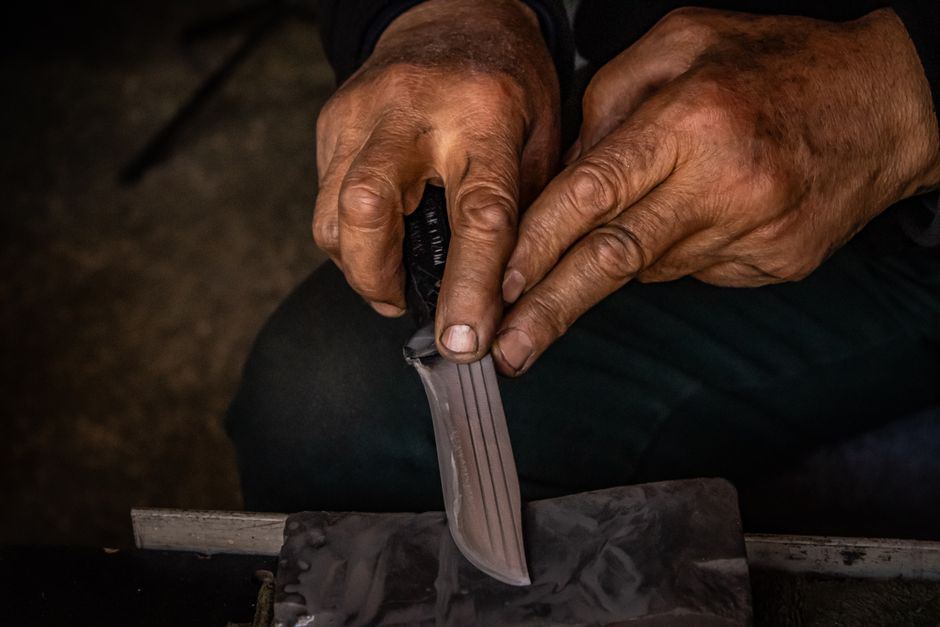
Whetstones and electric sharpeners solve the same problem in opposite ways. A whetstone sharpens by hand, drawing the blade across a flat abrasive surface at whatever angle you hold it -- slower to learn, but it removes less steel per session and gives more control over the exact edge you end up with. An electric sharpener pulls the blade through motorized abrasive wheels at a fixed or adjustable angle, trading some of that control for speed and consistency.

The practical trade-off comes down to metal removal and learning curve: a knife sharpened on a whetstone for years stays closer to its original profile, while repeated electric sharpening gradually narrows the blade faster because more steel comes off with every pass. Electric sharpeners win on convenience -- there's no technique to practice and results are consistent from the first use.

Guided ceramic-rod systems like the Spyderco Tri-Angle Sharpmaker split the difference: they use the same manual, low-metal-removal approach as a whetstone, but the fixed angle rods take away most of the technique required to use loose stones well.

Edge quality vs. speed

Whetstones generally produce a sharper, longer-lasting edge because you control the exact angle and pressure; electric sharpeners are faster and more consistent but remove more metal to get there.

Learning curve

A whetstone takes practice to hold a consistent angle freehand -- guided systems like angle guides or ceramic rod jigs shorten that learning curve without going fully electric.

How much metal you're willing to remove

Every sharpening removes a thin layer of steel. Whetstones remove the least per session, guided systems are in between, and electric sharpeners remove the most -- which matters most if you plan to keep a knife for decades.

Water, mess, and setup

Whetstones need soaking (or at least wetting) before use and some cleanup after; electric sharpeners are dry and ready to go, which matters if you want a quick touch-up rather than a sharpening session.

Product Best For Price Rating
Work Sharp Benchtop Whetstone Best Whetstone Overall $50 - $65 4.6/5
Chef'sChoice 15XV Trizor Professional Electric Knife Sharpener Best Electric Alternative $150 - $170 4.6/5
Spyderco Tri-Angle Sharpmaker Best Guided Whetstone (Beginner) $85 - $100 4.7/5
Sharp Pebble 1000/6000 Grit Whetstone Kit Best Budget Whetstone $40 - $50 4.5/5
Best Whetstone Overall

Work Sharp Benchtop Whetstone

4.6

A dual-grit (1000/6000) water stone with built-in, interchangeable angle guides and a non-slip base, widely reviewed as the top whetstone pick for home cooks moving from electric to hand sharpening.

  • Dual 1000/6000 grit covers repair and polishing in one stone
  • Built-in angle guides make hand technique easier to learn
  • Removes less metal per session than electric sharpeners
  • Needs soaking before use and periodic flattening over time
Best Electric Alternative

Chef'sChoice 15XV Trizor Professional Electric Knife Sharpener

4.6

A three-stage electric sharpener using diamond abrasives -- the fast, consistent alternative to a whetstone, putting a precise 15-degree bevel on straight and serrated blades without any hand technique required.

  • Sharpens in minutes with no freehand technique to learn
  • Handles both straight and serrated edges, unlike most whetstones
  • Far more consistent results for beginners than a stone
  • Removes noticeably more metal per sharpening than a whetstone
Best Guided Whetstone (Beginner)

Spyderco Tri-Angle Sharpmaker

4.7

An angled ceramic-rod system that sits between freehand whetstone sharpening and an electric guide, giving whetstone-quality edges with a fixed, foolproof angle instead of hand-held stone technique.

  • Fixed-angle ceramic rods remove the guesswork of freehand stone work
  • No water or oil needed, unlike traditional whetstones
  • Doubles as a quick honing tool between full sharpenings
  • Better for touch-ups and maintenance than repairing very dull or nicked edges
Best Budget Whetstone

Sharp Pebble 1000/6000 Grit Whetstone Kit

4.5

A budget-friendly dual-grit whetstone kit with a non-slip bamboo base and angle guide, aimed at first-time whetstone users who want to try hand sharpening without a big upfront cost.

  • Lowest price of the whetstone picks here
  • Angle guide included makes it more approachable for beginners
  • Dual grit handles both edge repair and polishing
  • Same soaking and drying routine required as any whetstone

Frequently Asked Questions

Should I buy a whetstone or an electric sharpener for my kitchen knives?

It depends on what you're optimizing for -- a whetstone like the Work Sharp Benchtop removes less steel per sharpening and gives more control over the exact edge, generally producing a sharper, longer-lasting result. An electric sharpener like the Chef'sChoice 15XV is faster and consistent from the first use, with no technique to practice, but removes more metal to get there.

How much metal does electric sharpening remove compared to a whetstone?

Electric sharpeners remove the most metal per sharpening session, whetstones remove the least, and guided systems like the Spyderco Tri-Angle Sharpmaker fall in between. This matters most if you plan to keep a knife for decades, since repeated electric sharpening gradually narrows the blade faster than whetstone use.

Is there a middle ground between a whetstone and an electric sharpener?

Yes -- guided ceramic-rod systems like the Spyderco Tri-Angle Sharpmaker use the same manual, low-metal-removal approach as a whetstone, but fixed-angle rods take away most of the technique required to use loose stones well. It's better for touch-ups and maintenance than repairing very dull or nicked edges, though.

How hard is it to learn to use a whetstone?

Holding a consistent angle freehand takes practice -- the Work Sharp Benchtop's built-in, interchangeable angle guides and the Sharp Pebble kit's included angle guide both shorten that learning curve without going fully electric, making them reasonable starting points for someone new to hand sharpening.

Do whetstones require more setup and cleanup than electric sharpeners?

Yes -- whetstones need soaking (or at least wetting) before use and some cleanup after, while electric sharpeners are dry and ready to go. This matters if you want a quick touch-up rather than a full sharpening session with setup time built in.